Protecting patient data in clinics: what to know in Albania and Kosovo

Every clinic holds one of the most sensitive kinds of data there is: health data. Diagnoses, treatments, photos and a patient's history are not ordinary information, and the law treats them differently. This article is a practical orientation for clinic owners and administrators. It does not replace the advice of a lawyer: for specific cases, consult one.
Which laws apply
In Albania, Law no. 124/2024 "On personal data protection" applies. It was adopted by Parliament in December 2024, replaces the earlier Law no. 9887/2008 and is aligned with the EU General Data Protection Regulation (GDPR). Supervision is carried out by the Commissioner for the Right to Information and Personal Data Protection.
In Kosovo, Law no. 06/L-082 on personal data protection applies, in force since March 2019, with the Information and Privacy Agency as the supervisory authority. This law also treats data concerning health as a sensitive category.
If your clinic treats patients from EU countries, for example in dental tourism, the GDPR itself may also apply. Again, check your case with a lawyer.
Why health data is special
As in the GDPR, the laws of both countries treat data concerning health as a "special category" or sensitive data. This means processing needs a clear legal basis and stronger safeguards. In practice, one rule is enough to remember: collect only what you need for treatment, keep it protected, and show it only to those who need it.
Your role: the clinic is the "controller"
The clinic decides why and how patient data is processed, so it is the controller. The provider of the software that stores it is the processor and works on your instructions. Your job is to have a processing agreement with the vendor and to know where the data is stored and who has access. Ask the vendor which sub-processors it uses (for example hosting) and request the list.
Patient rights
Patients have the right to know what data is held about them, to request a copy, to ask for corrections and, depending on the case, restriction or erasure. Medical records have legal retention periods, so erasure is not always possible. Assign one person in the clinic to handle these requests and set up a clear way to log them and reply.
Technical measures that matter
- Role-based access. Reception, doctors and administration see only what they need.
- Two-step verification (2FA) for accounts, especially administrators.
- Audit log. Know who opened, changed or exported a record.
- Backups that are protected and tested for recovery.
- Data separation. Each clinic should have its data kept apart from other clinics.
- Encryption in transit and at rest.
Organisational measures that get forgotten
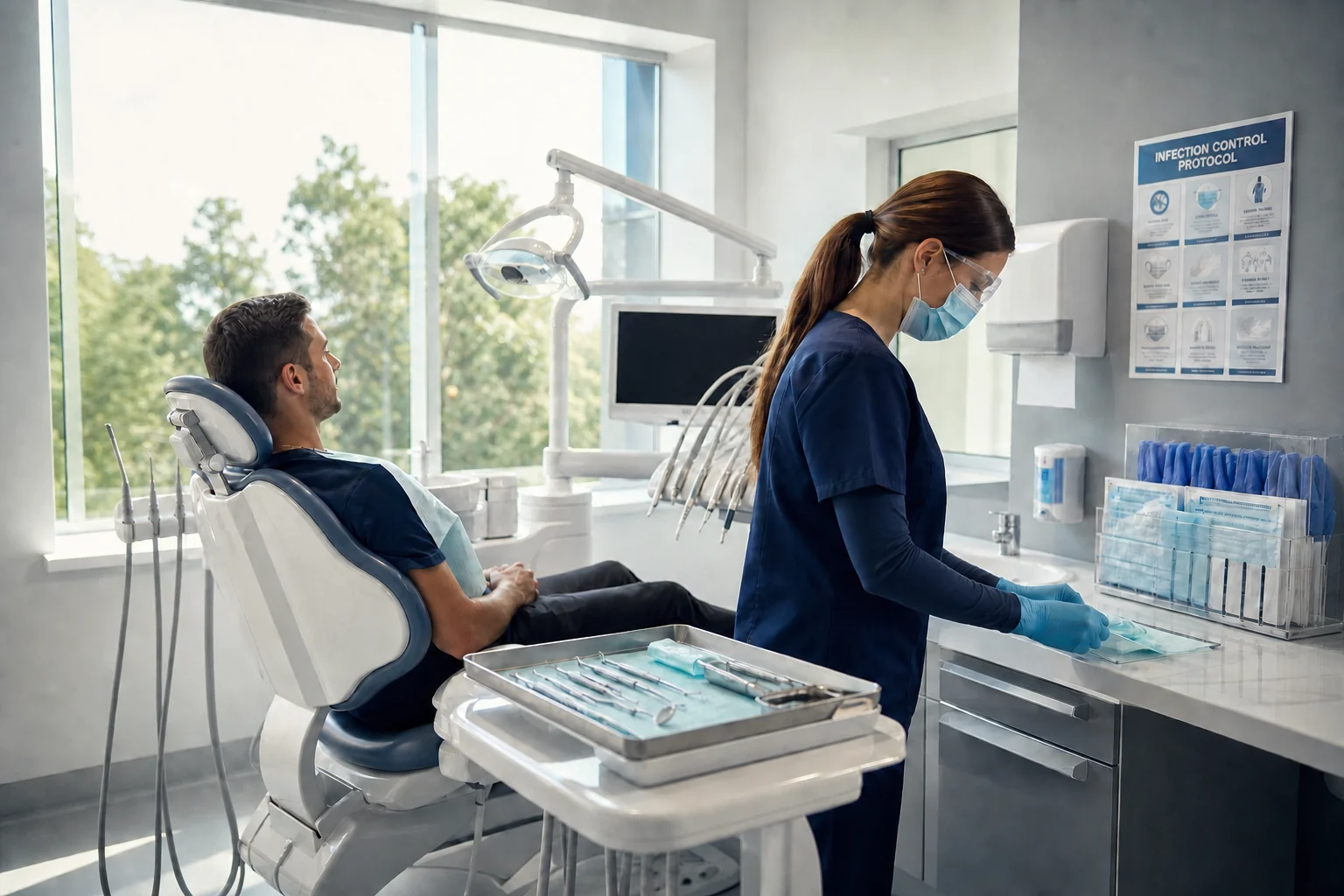
Technology is not enough. Staff must know what is allowed: do not share records in ordinary chat groups, do not photograph patients on personal phones, do not share passwords. Set a short policy, train the team when someone new joins, and disable the account of anyone who leaves immediately.
Everyday mistakes that create risk
Most problems do not come from sophisticated attacks but from small habits nobody notices. Typical examples in clinics:
- a chat group where staff share photos, lab results or patient names;
- one shared login for the whole reception, so nobody knows who changed what;
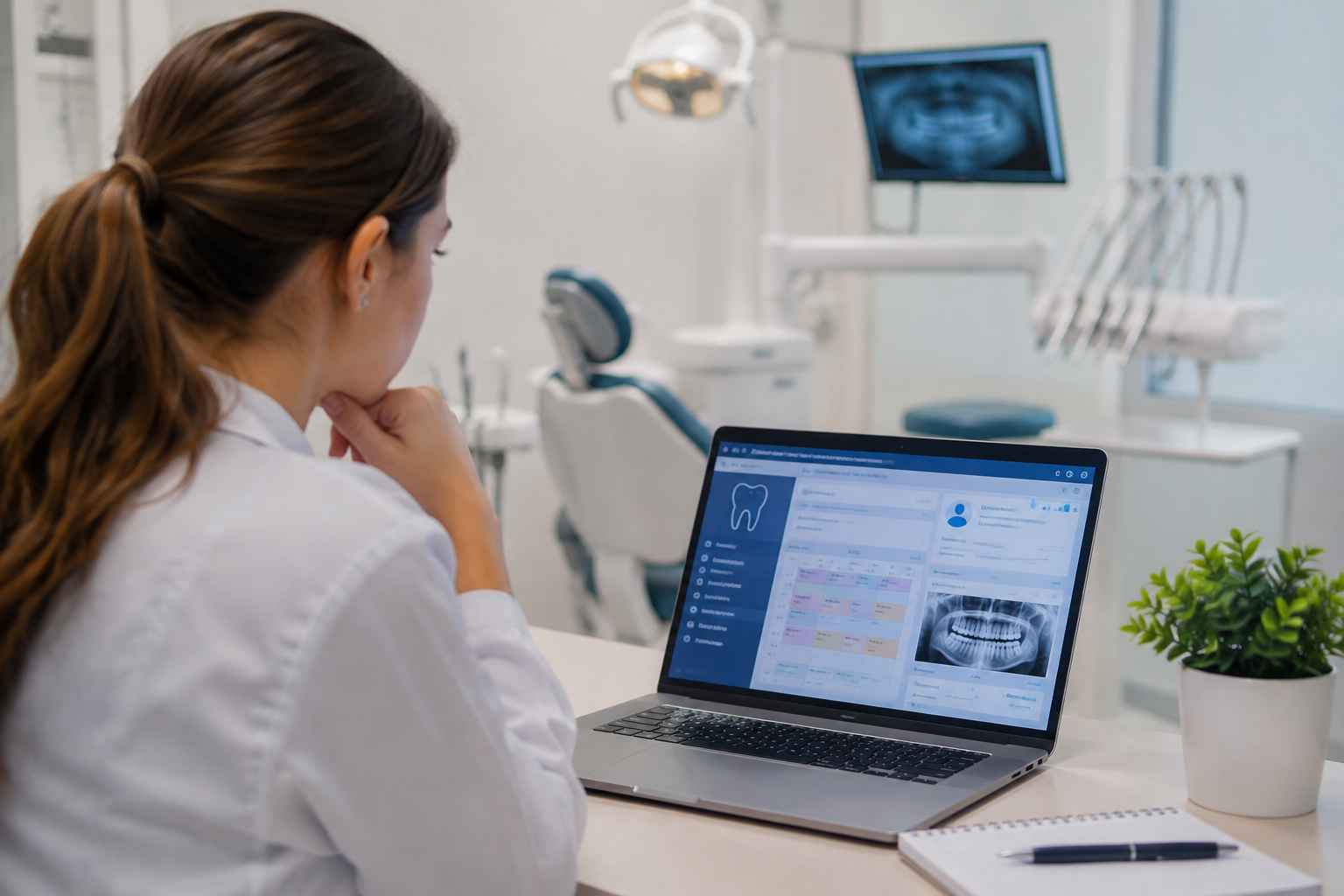
- an unattended computer at reception with a patient chart on screen;
- printed documents left on a desk or in a bin without being shredded;
- a former employee who still has access because nobody closed the account.
None of these is solved by a product alone. They are solved by simple rules, a personal account for every person, and software that makes it easy to do the right thing, for instance a chart that opens only with a personal login and leaves a trail for every access.
Patients from abroad
Clinics that work with dental tourism receive data from patients in other countries, often in the EU. Besides the local law, the GDPR may apply, so it is worth having a clear privacy notice and, where needed, written consent in a language the patient understands. The medical history form should also be completed in a language the patient fully understands, otherwise the consent and the data are not reliable. Any transfer of data abroad needs a legal basis, and it is sensible to ask a lawyer about it.
What happens when an incident occurs
A lost laptop, a compromised account or a document sent by mistake: incidents happen. Under GDPR principles, a breach that risks patients' rights is notified to the authority without undue delay and, where feasible, within 72 hours. Check the exact deadline and procedure in the local law. Keep a written plan: who decides, who notifies and how it is documented.
A checklist for the clinic
- There is a processing agreement with the software vendor.
- A visible privacy notice exists for patients.
- Roles and access are assigned, and accounts of former staff are closed.
- 2FA is active for administrators.
- Backups exist and have been tested.
- A record of processing is kept (what data, why, for how long).
- There is an incident plan and a responsible person.
- Staff are trained and there are rules for phones and photos.
What software can do, and what it cannot
Good software helps with the technical side: role-based access, 2FA, IP restriction, an audit log, backups and a separate database for every clinic. In doktor.al these are part of the system, and the main infrastructure is hosted in Germany. You will find the details on the page Data security and GDPR and in the Privacy Policy.
But no software makes a clinic compliant automatically. The legal basis, patient notices, retention periods and procedures remain the clinic's responsibility. Software is a tool, not a replacement for these decisions.
Sources
- Regulation (EU) 2016/679 (GDPR), EUR-Lex: Article 9 (special categories of data, including health data), Article 32 (security of processing) and Article 33 (notification of a personal data breach, within 72 hours where feasible).
- Albania: Law no. 124/2024 "On personal data protection", text published by the Commissioner's office (idp.al).
- Kosovo: Law no. 06/L-082 on Protection of Personal Data (Official Gazette no. 6, 25 February 2019); supervisory authority: Information and Privacy Agency.
This article is general information, not legal advice. Check the current text of each law and, for a specific case, consult a lawyer.