How to reduce missed appointments with automatic reminders
An empty slot in a clinic cannot be recovered. The dentist is there, the chair is clean, the materials are ready, but the patient does not come. Every missed appointment is a direct cost: the doctor's and assistant's time is not invoiced, and another patient could not be given that slot. This article explains why it happens, what research says about text reminders, and how to build a simple system that you can measure yourself.
Why do patients not come?
The reasons are more ordinary than they seem. A study in the Eastern Province military hospitals in Saudi Arabia asked patients why they missed a dental appointment. The most frequent reason was simply forgetting (24.3%), followed by being unable to get time off work or school (15.4%). Fear of treatment was mentioned by only 1.5% of patients [1].
Keep the limits in mind: these are military hospitals in another country, with a different population, and results vary from one setting to another. A narrative review of the causes of missed dental appointments also stresses socio-economic, cultural, geographic and demographic factors, alongside forgetting and unforeseen circumstances [2]. The practical lesson: many missed appointments do not come from lack of will but from forgetting and organisation, and these can be reduced with a notification at the right time.
What does research say about text reminders?
The Cochrane review "Mobile phone messaging reminders for attendance at healthcare appointments" (Gurol-Urganci and colleagues, 2013) collected randomised trials. In seven studies with 5,841 participants, text message reminders raised the attendance rate compared with no reminder (rate ratio 1.14, about 14% more patients attending). In three studies with 2,509 participants, text messages had a similar effect to phone calls (ratio 0.99), and two studies reported that the cost per attended appointment was 55% and 65% lower with text messages than with phone calls [3].
The authors rate the quality of the evidence as low to moderate and conclude that it is still not enough to settle policy decisions [3]. So reminders help in general, but there is no guarantee of a specific percentage in your clinic. Your own result has to be measured.
How to build a reminder system that works
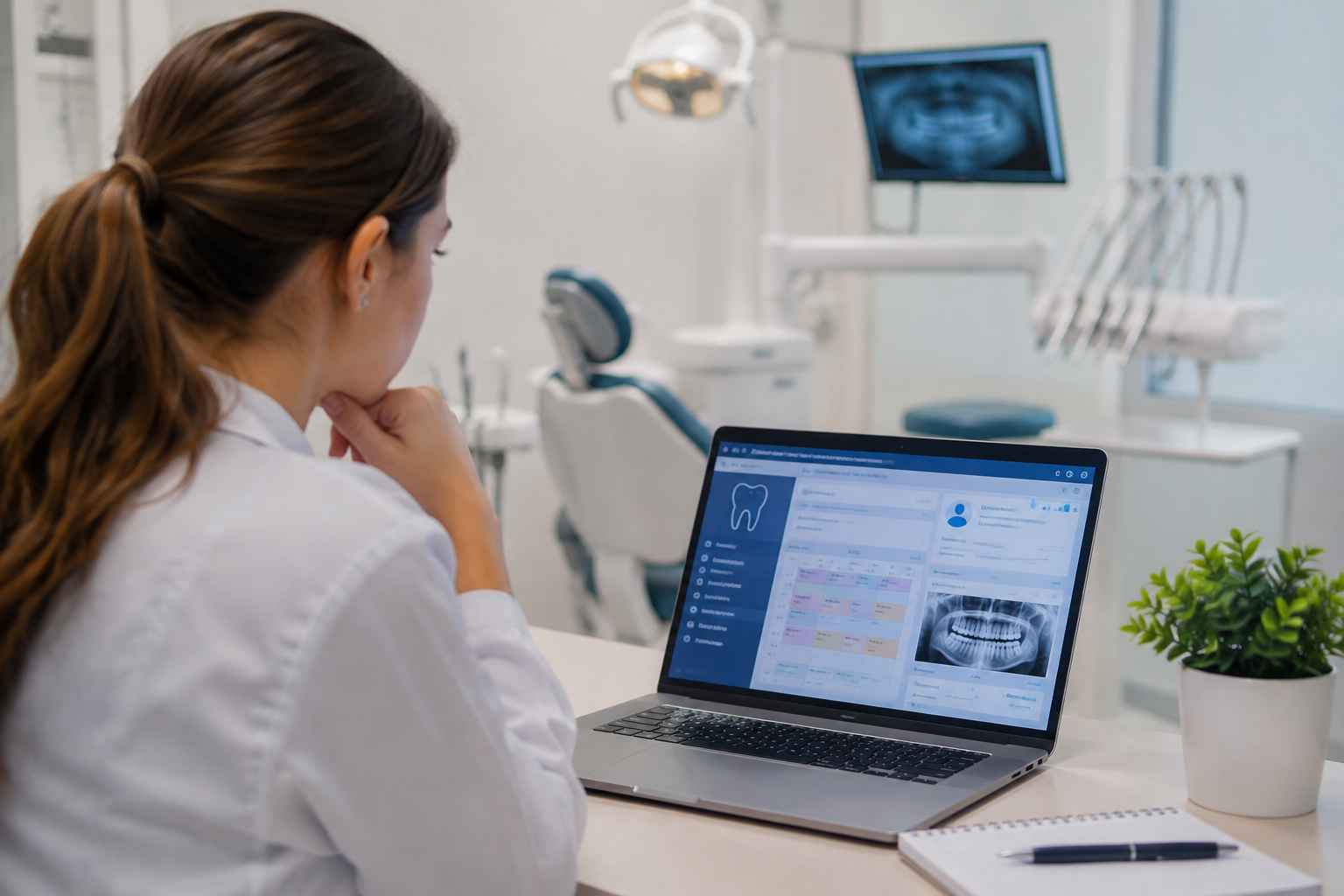
- Choose the channel your patients use. SMS, WhatsApp or email. In doktor.al you can use all three, and availability depends on the package you choose (appointments and SMS/WhatsApp reminders, in Albanian).
- Send a reminder before the appointment, at a time that leaves room for change. Many clinics send a notice one or two days ahead; test what works for your patients, because there is no single verified timing that fits everyone.
- Make confirming or changing easy. A reminder that lets the patient reply or call to change usually has more value than a plain notice, because a slot freed early can be used by another patient.
- Write the text with name, date, time, doctor and address. The message should be clear without opening any link.
- Keep a waiting list. When a cancellation arrives, call the first patient on the list. This turns a free slot back into an appointment.
- Set a rule for late cancellations and communicate it at booking, clearly and without harshness.
Start small: one channel, one message and one cancellation rule are enough for the first weeks. Add complexity only when you have data that the basics work. Do not forget the team: an automatic reminder saves staff the daily phone calls, but someone has to read the replies and keep the waiting list up to date.
Reminders and privacy
An appointment message contains the patient's name and is tied to a dental clinic, so it can reveal health information. Do not add the diagnosis or treatment to the message; date, time and place are enough. Also check that the patient agreed to receive notifications and that the phone number is correct. For the legal framework in Albania and Kosovo read the guide to data protection in clinics (in Albanian).
How to measure the result
Before you switch on reminders, count for four weeks how many appointments were booked and how many were not attended without warning. Divide the number missed by the number of appointments to get your percentage. After switching on, measure the same thing for another four weeks and compare. Also note other changes in this period (a campaign, a new doctor), so you do not credit reminders with something they did not do. If the number does not fall, change the text, the timing or the channel and measure again.
In summary
Missed appointments have ordinary causes, often forgetting, and text reminders have evidence that they help, although its quality is not high and results vary from clinic to clinic. Build a simple system, measure before and after, and adjust. If you want to see how the shared calendar and automatic reminders work, see the appointments and reminders page (Albanian) or work out the price of a package.
Sources
- Why Do Patients Miss Dental Appointments in Eastern Province Military Hospitals, Kingdom of Saudi Arabia? PubMed Central (PMC5963945).
- Garrido C, Sepúlveda D, Zúñiga R, Cartes-Velásquez R. Inasistencia a citas dentales: una revisión breve de las causas y las estrategias para su prevención. Revista Estomatológica Herediana, 2024;34(1):63-68.
- Gurol-Urganci I, de Jongh T, Vodopivec-Jamsek V, Atun R, Car J. Mobile phone messaging reminders for attendance at healthcare appointments. Cochrane Database of Systematic Reviews, 2013, issue 12 (CD007458).
This article is general information. The percentages quoted come from the studies mentioned and are not doktor.al results.