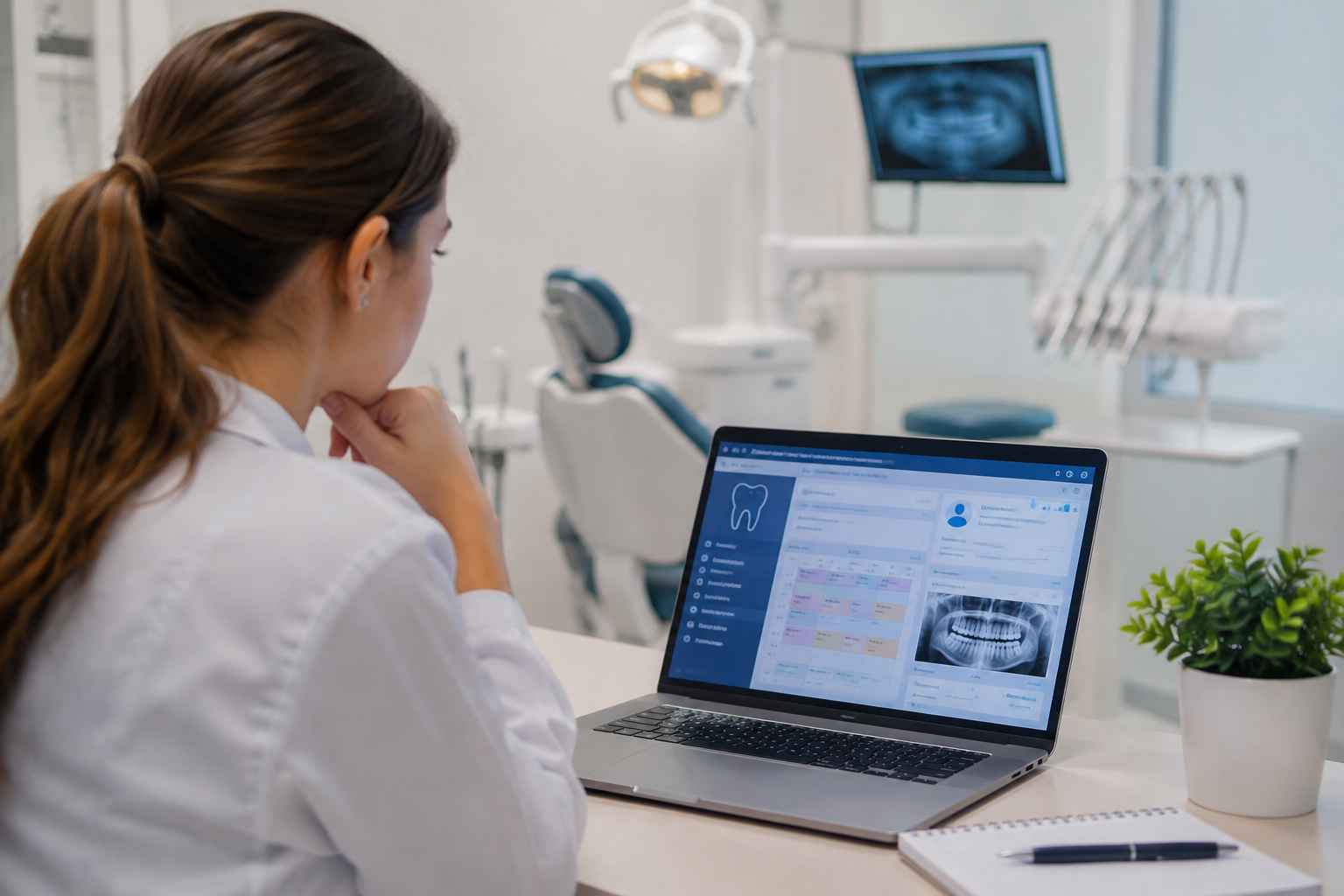
Software for an aesthetic or eye clinic: what sets it apart from general software
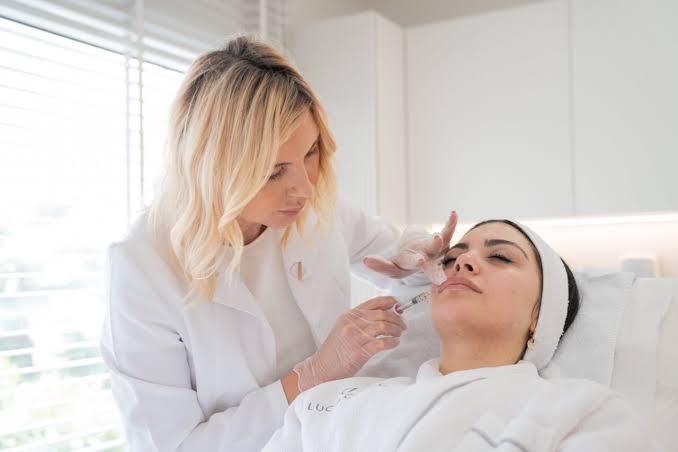
Many clinic programs are built around a general chart: the patient's name, a field for the diagnosis and one for notes. That is enough for a simple visit, but not for an aesthetic or an eye clinic, where the most important part of the work does not fit into a text field. This article describes what each of them needs and what to ask when you look at a program.
Why a general chart is not enough
An ophthalmologist has to compare the visual acuity of the right eye with the left and with last year's visit. An aesthetic doctor has to know which product, with which lot and in which area was applied to the patient four months ago. If the software does not know this structure, the data is written as free text, and free text cannot be compared, charted or reminded.
The aesthetic clinic: what to look for
- Treatment with area, product, amount and lot. When a product is recalled or a patient has a reaction, you must be able to find at once who received that lot.
- Before and after photos kept in the chart and protected, not on staff phones.
- Session packages with tracking of completed and remaining sessions, and payment in full, in instalments or by package.
- A signed consent for the treatment, linked to the relevant treatment.
- Return reminders. Patients are notified when it is time for their next treatment.
- Inventory with lot and expiry, with a notice when a product is running out or expiring.
More on this on the page about the digital chart for aesthetic clinics.
The eye clinic: what to look for
- Measurements for each eye (OD and OS): visual acuity without and with correction, refraction, intraocular pressure.
- A pressure graph from visit to visit, especially useful for following glaucoma.
- Eye examinations documented, for example the anterior segment and the fundus, and the measurements of devices.
- Glasses prescriptions ready to print and, if you have an optical shop, convertible into an order with a notice when the glasses are ready.
- Examination images (OCT, fundus photos, visual field) attached to the chart.
- Reminders for the next check-up for patients under follow-up.
More on the page about the digital ophthalmology chart.
Two examples from daily work
An aesthetic clinic. A patient comes for Botox in the forehead. The doctor records the area, the product, the amount and the lot, and takes the before photo. Two weeks later she comes for a check and the after photo is taken. Four months later the system sends her a reminder for the next session. If the supplier announces that a lot has a problem, the clinic finds all the patients who received it within minutes. Without the right structure, this case would mean searching through folders one by one.
An eye clinic. A 64-year-old patient comes for a glaucoma check-up. The preliminary measurements record the visual acuity and the pressure for each eye. The doctor sees the pressure of the last three visits at once in a graph and compares it with today's value. If new glasses are needed, the prescription is printed or goes to the optician, and the patient is notified when they are ready. In a general program the same work would be done in free text, with no graph and no comparison.
The mistakes when a clinic picks a general program
- It writes measurements as text, and then cannot compare or chart them.
- It keeps lots, expiry dates and photos on separate sheets and phones.
- It tracks package sessions in a notebook, outside the program.
- It pays for modules it does not use and lacks the ones it needs.
- It switches to another program after a year, losing the history.
And general clinics?
A general clinic has other needs: medical history, vital signs, a waiting queue, prescriptions, tests and referrals to specialists. Here too a program "for everything" often does not fit well. See the digital medical chart for what it should have.
What to ask in a demo
- "Show me a complete treatment from start to finish for our type of clinic", not a general demo.
- "How do I compare two visits of the same patient?"
- "How do I find all the patients who received a certain product or a certain measurement?"
- "How are roles split: who sees the photos, who sees the prices?"
- "What changes in the price compared with an ordinary clinic?"
What stays the same in every clinic
Whatever the type, some things every good program must have, and you should not sacrifice them for the specialised part: a shared calendar with reminders, invoicing linked to the services, separate roles and access, backups and data protection, and an app that also works on a phone. Specialisation has to be added on top of this base, not instead of it. If a program is very good for before and after photos but weak on invoicing or security, you will still pay the price later.
A simple test: ask the vendor how many clinics of your type use the program and ask to speak to one of them. The answer from a clinic that uses it every day is worth more than any presentation.
Price and getting started
For aesthetic, eye and general clinics, the price depends on the number of staff and users and on the modules you need. That is why we send a tailored offer, not a general list. You can see the aesthetic clinic, the eye clinic or the general clinic and message us on WhatsApp for a demo with examples from your type of clinic.